
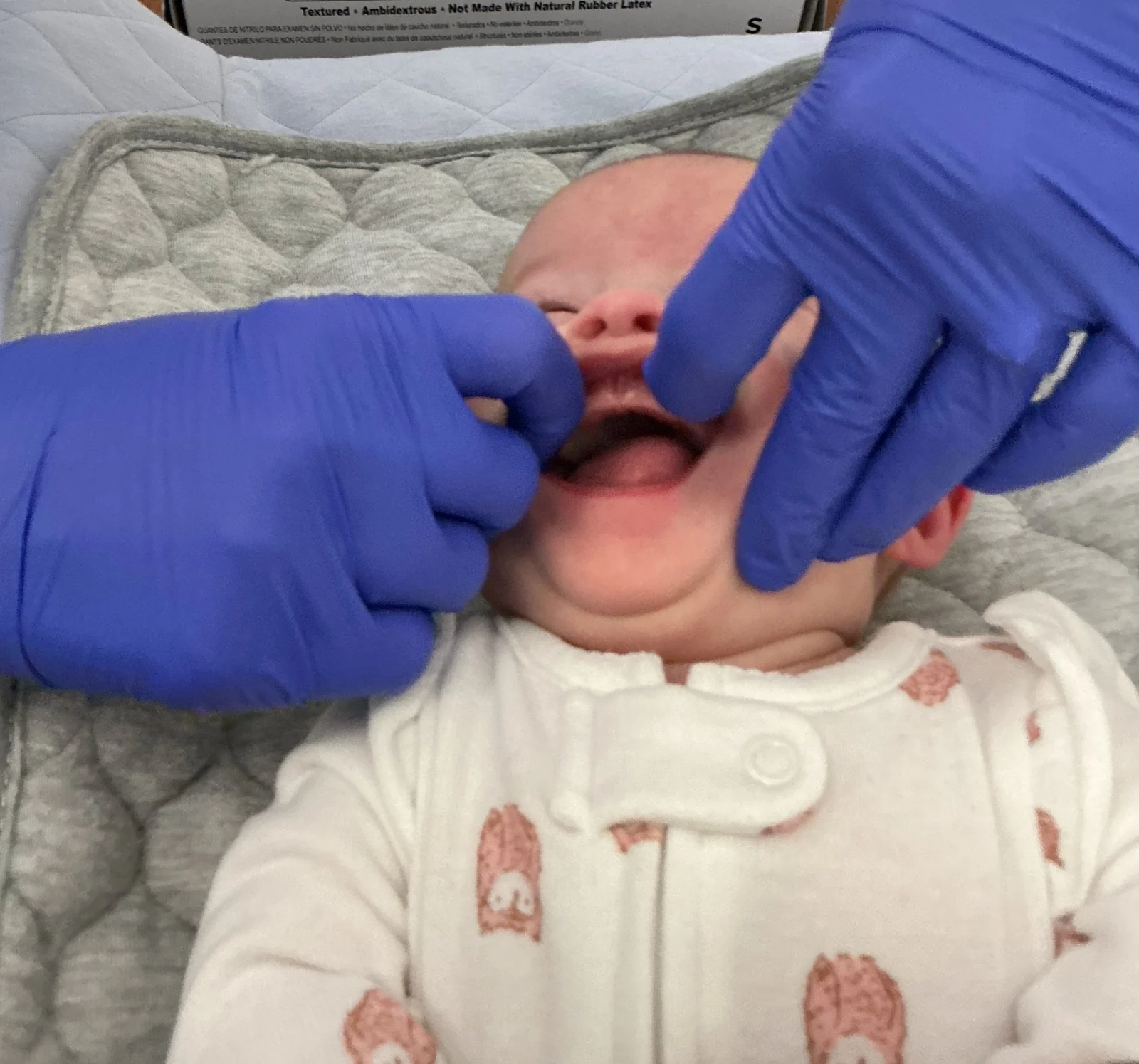
A tongue tie, known clinically as ankyloglossia, occurs when the frenulum, the small band of tissue connecting the tongue to the floor of the mouth, is too short, thick, or tight. This restricts the tongue's range of motion and can interfere with feeding, speech, breathing, and oral development.
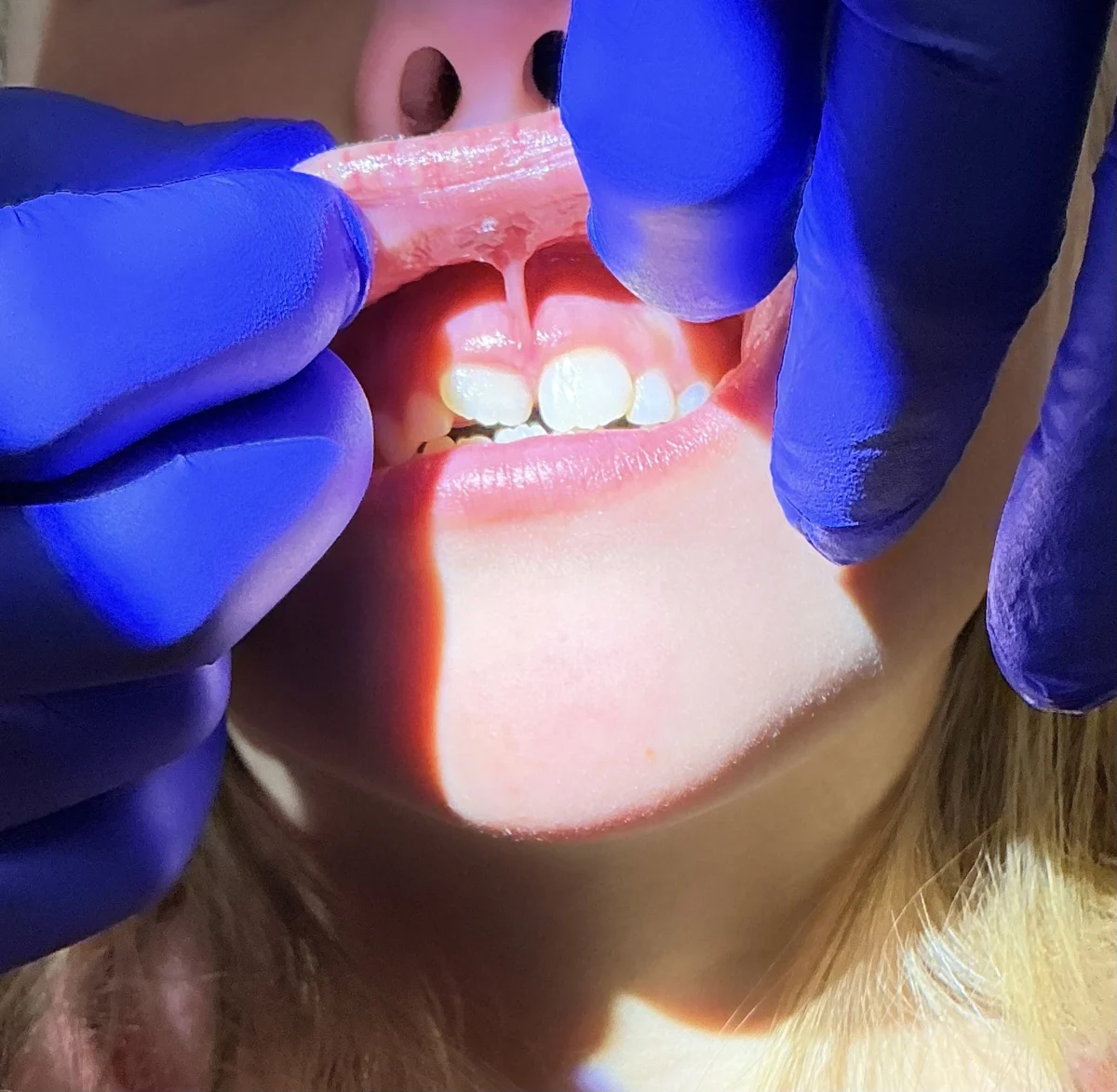
A lip tie occurs when the labial frenulum, the tissue connecting the upper lip to the gum line, is too tight or restrictive. Lip ties are commonly found alongside tongue ties, and together they can make nursing significantly more difficult for infants.
Both conditions are present from birth and are more common than most people realize. They are not always obvious to the untrained eye, which is why many families spend months searching for answers before a proper evaluation identifies the underlying cause of feeding or developmental difficulties.
At Peak Family Dentistry, Dr. Adams takes a thorough, whole-body approach to evaluation. She assesses tongue and lip mobility in the context of airway, jaw development, and overall oral function, not just whether a frenulum appears visually tight. The goal is always to understand the full picture before recommending treatment.
In infants, tongue tie and lip tie most commonly present as problems with breastfeeding. Signs include difficulty latching, poor milk transfer, prolonged or painful nursing sessions, excessive gas or colic, clicking sounds during feeding, poor weight gain, and nipple pain or damage for the mother. Bottle-fed babies may also struggle with fatigue during feeding or take in excess air.
As children grow, an unresolved tongue tie can affect speech development. Difficulty with sounds that require the tongue tip to elevate, such as l, r, t, d, n, and th, is common. Some children compensate with alternative tongue postures that create secondary issues. A tongue tie does not always cause speech delay, but when it does, a frenectomy combined with speech therapy can make a significant difference.
When the tongue cannot rest in its proper position at the roof of the mouth, the upper jaw does not develop as broadly as it should. This can lead to a narrow palate, nasal airway restriction, and mouth breathing, which in turn affects sleep quality, facial development, and long-term health. At Peak Family Dentistry, tongue tie is evaluated in the context of airway and arch development, not in isolation.
A restricted tongue posture can contribute to crowded teeth, an open bite, a high narrow palate, and gaps between the front teeth. Lip ties are also associated with a gap between the upper front teeth and difficulty keeping the lips sealed. Catching these issues early gives children the best chance of normal jaw and arch development without more involved treatment later.
A frenectomy is a minor procedure in which the restrictive frenulum tissue is released, restoring normal range of motion to the tongue or lip. When performed at the right time and in the right clinical context, it can produce immediate and lasting improvements in feeding, speech, and oral function.
At Peak Family Dentistry, Dr. Adams performs frenectomies using a careful, precise approach with the goal of minimizing discomfort and healing time. The procedure is quick, typically completed in just a few minutes, and is well tolerated by infants, toddlers, and older children alike.
What the process looks like:
For nursing infants, Dr. Adams recommends a lactation consultant before and after the procedure to maximize outcomes. For older children with speech concerns, coordination with a speech-language pathologist gives the best results. Dr. Adams is happy to work alongside your existing care team.
Ready to find out if a frenectomy is right for your child? Call us at:
Many adults live with an undiagnosed tongue tie for decades, often without realizing it is connected to issues they experience every day. Chronic neck and shoulder tension, difficulty swallowing, sleep-disordered breathing, TMJ dysfunction, poor tongue posture, and even digestive issues have all been associated with restricted tongue mobility in adults.
Adult frenectomy is a real and effective option. Dr. Adams evaluates adults for tongue tie in the context of their broader oral health, airway, and jaw function. For adults, the procedure is typically performed with local anesthesia and may be combined with myofunctional therapy to help retrain tongue posture and function following release.
If you have been told your tongue tie is not a problem, or if you have been searching for answers to symptoms you cannot explain, a consultation with Dr. Adams is a good place to start.
Not all tongue tie evaluations are the same. The difference between a thorough evaluation and a surface-level one can mean the difference between a procedure that resolves the problem and one that does not. Dr. Billie Adams approaches tongue and lip tie as part of a broader understanding of airway, jaw development, and oral function, the same framework she applies to every patient.
Dr. Adams has extensive post-graduate training in pediatric airway and functional dentistry. She understands how tongue posture connects to arch development, breathing, sleep, and long-term health. She does not evaluate frenula in isolation. She looks at the whole child, and the whole picture, before making any recommendation.
Many families come to Peak Family Dentistry after seeing other providers who did not identify a tongue tie, or after a frenectomy elsewhere that did not fully resolve the problem. Dr. Adams takes time with each case, explains her findings clearly, and coordinates care with lactation consultants, speech therapists, and other providers when appropriate.
If you are in Albuquerque, Rio Rancho, or the surrounding areas and you are looking for an experienced, thorough provider for tongue tie or lip tie evaluation and treatment, we would welcome the opportunity to help.

Explore these patient guides for more detail about evaluation, treatment options, and questions to bring to your visit.
If you are searching for tongue-tie removal near you, the first step is an evaluation of function and symptoms. A visible band of tissue under the tongue does not automatically need treatment. Ask what movement is restricted, how it relates to the concern and what alternatives are available before agreeing to a procedure.
Patients often use “tongue-tie removal” or “tongue-tie release” when asking about treatment of restrictive tissue. Clinicians may use terms such as frenotomy or frenectomy for different procedures. Ask Dr. Adams which procedure, if any, is being recommended, why it fits your situation and what recovery involves.
No. For infants, feeding function and a complete breastfeeding assessment matter more than appearance alone. The American Academy of Pediatrics recommends evaluating other causes of feeding difficulty and using a coordinated care team. A release may be considered for a restrictive frenulum associated with feeding problems that persist despite appropriate support. Treatment should not be promised to prevent future sleep apnea or speech problems.
Our infant frenectomy page explains the practice's services. Share your baby's feeding and weight-gain history, and involve the pediatrician and lactation professional in the discussion.
Describe the specific task that feels limited, such as a particular tongue movement or difficulty managing food. Ask whether the restriction explains that difficulty, whether another clinician should assess it and how the outcome would be measured. Neck tension, snoring or jaw discomfort alone does not establish that a tongue tie is the cause.
Ask for an individualized estimate that identifies the evaluation, any proposed procedure and follow-up. Check benefits directly with your plan and ask whether therapy or care from another provider would be billed separately. Coverage and treatment needs vary.
The next step may be monitoring, additional assessment, supportive care or a procedure when indicated. If treatment is recommended, ask about risks, comfort measures, aftercare and who to contact with concerns. Follow instructions tailored to the patient's age and procedure rather than using an online exercise routine.
Peak Family Dentistry is at 4710 Eubank NE, Unit A, Albuquerque. Request a tongue-tie evaluation or call (505) 293-2211 to discuss an appointment with Dr. Billie Adams.
Contact Us Today
Dr. Adams and the staff of Peak Family Dentistry are here to help patients in Albuquerque, NM, experience the benefits of great health and beautiful smiles. We treat you like a member of our family. Your voice matters, your presence is welcome, and we are always glad to hear from you.
You can also reach us by phone at:
(505) 293-2211