
Peak Family Dentistry • Patient Education
A mandibular advancement appliance is a removable device worn during sleep that holds the lower jaw forward to help keep the upper airway open. Also called a mandibular advancement device (MAD), it may be an option for adults with obstructive sleep apnea.
Peak Family Dentistry offers custom oral appliances in Albuquerque. Choosing one starts with understanding your sleep diagnosis and whether your mouth can support the device—not simply choosing a mouthpiece that looks comfortable. Our sleep apnea treatment page explains the practice’s services.
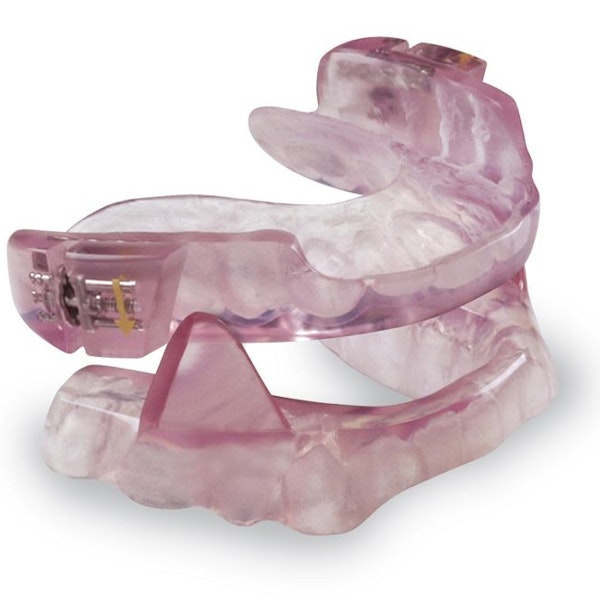
How does a mandibular advancement appliance work?
The mandible is the lower jaw. A sleep appliance holds that jaw in a forward position rather than allowing it to move backward during sleep. The position can help reduce upper-airway blockage. The device fits over the teeth and is removed after sleeping. NHLBI explains how oral devices support the airway.
A grinding guard and a sleep-apnea appliance have different jobs. A typical night guard protects teeth from grinding or clenching; it is not a substitute for a device prescribed to manage airway obstruction. Appearance alone does not tell you what a mouthpiece treats. See the different purposes of mouth guards.
Who may be a candidate for an oral appliance?
An oral appliance may be considered for an adult with obstructive sleep apnea who cannot tolerate CPAP or prefers another treatment. The joint AASM/AADSM guideline recommends a custom, adjustable appliance when oral appliance therapy is prescribed. “Adjustable” means the jaw position can be changed as treatment is refined. Read the oral appliance guideline.
Mild to moderate obstructive sleep apnea is a common setting for this treatment. Severe sleep apnea requires particular care when considering alternatives to CPAP. A mandibular advancement device does not treat central sleep apnea, which involves problems with the signals controlling breathing. Cleveland Clinic describes suitability and limitations.
The dental evaluation also matters. Your clinician assesses the teeth, supporting tissues, bite, jaw movement and existing dental work before recommending an appliance. Tell the dentist about jaw pain, loose teeth or a change in your bite. AADSM standards describe the pretreatment examination.
This guide concerns adult sleep-apnea care. Children’s bite development is a separate discussion; our early orthodontics guide covers that evaluation.
Is a mandibular advancement device better than CPAP?
Neither option is best for every patient. CPAP is generally more effective at reducing breathing interruptions and improving oxygen levels. An oral appliance offers a different approach for an appropriate patient, especially when CPAP is difficult to use consistently. The AASM explains the comparison.
| Treatment | How it works | Practical consideration |
|---|---|---|
| CPAP | Supplies pressurized air through a mask to keep the airway open. | Requires a machine and mask; fit and comfort concerns should be discussed with the sleep team. |
| Mandibular advancement appliance | Holds the lower jaw forward while worn. | A compact mouthpiece, but fit, jaw comfort and tooth position need monitoring. |
Do not stop prescribed CPAP or change to an appliance on your own. Ask your sleep clinician how a transition would be managed and how the new treatment’s effectiveness would be confirmed.
What happens before and after the appliance is fitted?
Expect a care process involving both medical and dental assessment. The 2025 AADSM standards emphasize collaboration rather than treating the appliance as a stand-alone purchase.
- Establish the diagnosis. A medical provider evaluates suspected sleep apnea and interprets appropriate sleep testing. Screening questions alone do not establish a diagnosis.
- Check dental suitability. The dentist reviews oral health and the bite, then discusses appliance options and risks.
- Make and fit the device. Dental impressions or scans guide fabrication. At fitting, you receive instructions for use and care.
- Adjust and verify. The position is refined with professional guidance. The medical provider assesses whether treatment adequately controls the sleep disorder.
Less snoring does not, by itself, prove that sleep apnea is controlled. Follow-up sleep testing helps confirm the result. Ask who will arrange it and when you should return for dental checks. Ongoing visits are part of treatment, even when the appliance feels comfortable. AASM/AADSM follow-up recommendations
What side effects should you watch for?
Possible side effects include jaw or tooth discomfort, dry mouth, increased saliva and gum irritation. Longer-term changes can involve tooth position or the bite. Report discomfort rather than assuming you must tolerate it. Cleveland Clinic’s side-effect overview
Your dentist may adjust areas that rub or help manage morning jaw discomfort. Persistent pain, a bite that feels different, or a damaged appliance deserves a call to the office. Bring the appliance to follow-up visits so its condition can be checked. The AADSM’s patient resources explain common problems and how a dentist can help.
Keep the written cleaning and adjustment instructions for your particular device. Before leaving the fitting appointment, ask the team to demonstrate the routine and explain what to do if the appliance breaks or stops fitting.
How much does a mandibular advancement appliance cost?
A useful estimate should explain the care included, not just name a mouthpiece price. Request an individualized written quote before committing to treatment. Ask these questions when comparing options:
- Does the quote include the dental evaluation, records, appliance and fitting?
- Which adjustment and follow-up visits are included?
- Will sleep testing be billed separately by a medical provider?
- What happens if repairs, replacement or further treatment are needed?
For insurance, ask your plan whether the proposed treatment is covered, what documentation or prior authorization it requires, and whether the provider is in network. Ask whether the claim falls under medical or dental benefits and what your estimated responsibility would be. Confirm the answer for your plan rather than assuming another patient’s coverage applies.