
Peak Family Dentistry • Patient Education
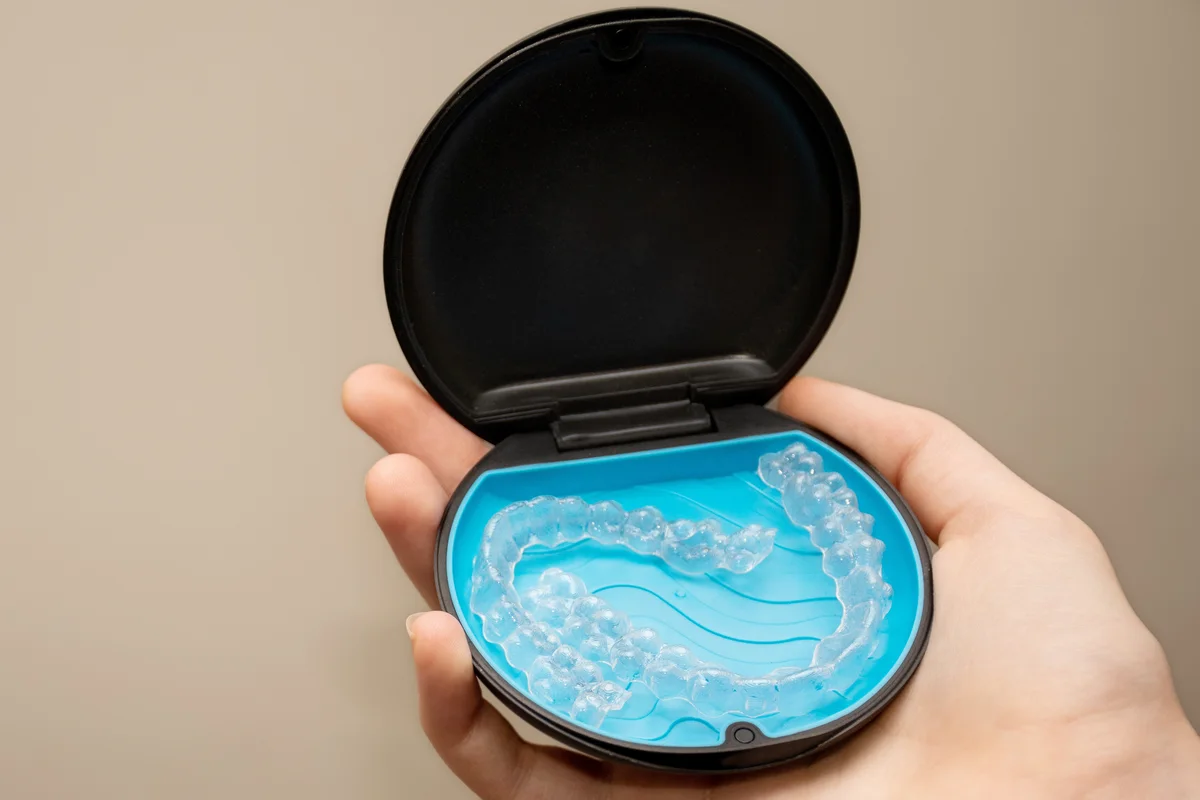
Quick answer: MARPE and clear aligners do different jobs, and they're often used in sequence. MARPE widens a narrow upper jaw by working on the bone. Clear aligners then align the teeth within the wider arch. Aligners alone can widen the dental arch modestly, mostly by tilting the teeth, but they aren't designed to change the jaw itself. At Peak Family Dentistry in Albuquerque, NM, Dr. Billie Adams provides both MARPE and clear aligners (Invisalign and SureSmile), so one provider can plan the two together. Timing and sequence are individualized and set after your evaluation.
This article is for general education and isn't a substitute for an in-person evaluation.
Why MARPE and Clear Aligners Are Used Together
A narrow upper jaw and crooked teeth are related but separate problems. MARPE addresses the width of the jaw. Aligners address where each tooth sits. Treating one doesn't automatically solve the other.
| Comparison | MARPE | Clear aligners |
|---|---|---|
| What it moves | The two halves of the upper jaw | Individual teeth |
| How it works | Mini-screws anchor an expander directly to palatal bone | A series of custom trays moves teeth in small steps |
| Best at | Skeletal widening in adults whose palate seam has matured | Straightening, closing spaces, refining the bite |
| Main limitation | The seam doesn't always open, and some relapse can occur | Widening happens mostly by tooth tilting, not jaw change |
Can Clear Aligners Widen the Palate on Their Own?
Clear aligners can widen the dental arch to a degree, but they can't widen the jaw itself. A scoping review of maxillary arch development with clear aligners found that expansion occurs primarily through buccal tipping of the back teeth. It concluded that aligners show moderate effectiveness for mild to moderate cases and are less predictable for bodily tooth movement or large-scale skeletal change.
When the problem is a skeletally narrow palate, such as a crossbite or a high, narrow arch, aligners alone are unlikely to correct the underlying width. That's the situation MARPE is designed for, and our MARPE page describes the appliance.
How MARPE and Aligner Treatment Are Typically Sequenced
Sequences vary by patient, but the general logic is consistent:
- Evaluation and imaging. The provider assesses jaw width, bite, and palate maturity, and decides whether MARPE is appropriate.
- Appliance placement. The expander is anchored to the palate with mini-screws.
- Active expansion. The expander is adjusted gradually for several weeks, depending on the case.
- Retention. The expander stays in place for months afterward so new bone can form and stabilize the new width.
- Alignment. Clear aligners, planned from digital scans of the widened arch, move the teeth into their final positions.
Some providers begin aligners during the retention period and others wait until it ends. Which approach fits depends on the individual case. Planning aligners after the arch has widened lets the trays fit the new arch shape instead of the old one.
How Dr. Adams Approaches Coordination at Peak Family Dentistry
Dr. Adams uses MARPE for adults whose palate seam has already fused, as described on our airway orthodontics page. She also provides Invisalign and SureSmile clear aligners, covered on our clear aligners page and Invisalign page. Because both treatments happen in one office, a single provider can plan the jaw-widening phase and the alignment phase together instead of passing records between offices.
For aligners, the process starts with a candidacy visit, followed by digital scans and a custom series of aligners, then regular check-ins. How those steps are timed around MARPE is decided for each patient at the evaluation. If imaging suggests a surgical approach would be more predictable, that decision involves an oral and maxillofacial surgeon. You can read the differences in our comparison of MARPE vs. SARPE.
What the Research Says About Results and Retention
A systematic review and meta-analysis of MARPE in mid to late adolescents and adults reported a mean success rate of 93.87% across twelve studies, with skeletal and dental expansion in most patients. The same review rated the quality of evidence as very low, because eleven of the twelve studies were retrospective and all carried moderate or serious risk of bias. It also found a degree of skeletal and dental relapse over time.
That relapse finding is why the retention period matters, and why finishing treatment with aligners or braces is part of the plan, not an optional extra. These results describe groups of patients and are not a guarantee for any one person.
Questions to Ask Before Starting
- Is my palate seam likely to open with MARPE, based on my imaging?
- Will I need clear aligners afterward, and when would they begin?
- How will my aligners be planned around the expander?
- What does retention involve, and how long should I expect it to last?
- What happens if the expansion doesn't go as planned?
Frequently Asked Questions
Will I always need clear aligners after MARPE?
Not always. MARPE widens the jaw, but teeth may still need alignment afterward. Whether that means aligners, braces, or neither depends on your bite after expansion.
Can aligners start while the expander is still in place?
Some providers do this during the retention period. Whether it's appropriate for you is a decision made at your evaluation.
Does MARPE replace the need for a consultation about aligners?
No. Candidacy for each treatment is evaluated separately, even when they're planned together.
Getting an Individualized Plan
Whether MARPE, clear aligners, or both fit your situation depends on your anatomy and goals. To discuss them with Dr. Adams, contact Peak Family Dentistry in Albuquerque or call (505) 293-2211.
References
- Zeng W, Yan S, Yi Y, Chen H, Sun T, Zhang Y, et al. Long-term efficacy and stability of miniscrew-assisted rapid palatal expansion in mid to late adolescents and adults: a systematic review and meta-analysis. BMC Oral Health. 2023;23:829. https://pubmed.ncbi.nlm.nih.gov/37924088/
- Maxillary arch development with clear aligners: A comprehensive scoping review. PubMed (PMID 41523298). https://pubmed.ncbi.nlm.nih.gov/41523298/